Thursday, March 15, 2012

Smokers Suffer Worse Dental Health


A new government report from the Centers for Disease Control and Prevention (CDC) has highlighted the fact that although people who smoke have more problems with their teeth than non-smokers, they are actually less likely to visit their dentist.

These findings are based on a CDC survey taken in 2008, The survey involved more than 16,000 adult participants between the ages of 18 and 64.

The survey results indicated that over one third of smokers admitted to having 3 or more dental problems, which was more than twice the incidence of dental problems among individuals who have never smoked. The dental problems included jaw pain, toothache, infections, and stained teeth.

In addition to this, 20 percent of the smokers had not seen a dentist in at least 5 years. Among non-smokers and former smokers who had quit, only 10 percent of respondents had avoided seeing a dentist for that long.

The researchers noted that smokers appear to be aware that they are having problems with their teeth, but are not seeking a dentist to provide necessary dental care. 50 percent of the smokers surveyed, indicated that affordability was an issue, and that they were unable to pay for the cost of seeing a dentist. This reason was given much more frequently by smokers than by non-smokers who did not regularly see a dentist.

Caroline Wallace DDS
103 South Colorado Street
Salem , Virginia, 24153
540-387-3844

Wednesday, February 22, 2012

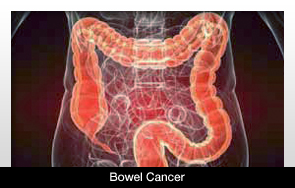
Some Oral Bacteria May Cause Bowel Cancer

Maintaining solid oral hygiene could be a key to preventing bowel cancer.
A research team from the Dana-Farber Institute and the Broad Institute discovered a correlation between bacteria associated with gum disease and nine colorectal tumor samples. This indicates that there could be some kind of link.
Bowel cancer is one of the more common types of cancer. Only about half of the people who develop bowel cancer survive.
Much more research is necessary to determine the extent of the relationship between bowel cancer and oral bacteria. Matthew Myerson, the co-director of the Center for Cancer Genome Discovery at the Dana-Farber Institute and the lead author of the study, however, discovered the presence of the fusobacterium in tumors in the bowels. This bacterium is generally involved with causing gum disease.
This information lends more credence to the idea that good oral health leads to good overall health. Maintaining a daily oral hygiene routine as well as visiting the dentist regularly will ensure that a person won’t have to worry about bowel cancer.

 Dr. Caroline Wallace DDS
Complete Dental Care
103 South Colorado Street
Salem, Virginia, 24153
540-387-3844

Friday, February 10, 2012

Air Flossing


Air Floss-Answers to your questions

What exactly is it and how does it work?
Air Floss is a new device developed by Philips Sonicare to remove plaque biofilm from between the teeth.  It uses a rapid burst of air and water dropltes to disrupt the biofilm from between the teeth.  It is called “microburst technology.”

Is it better than floss?
Studies have shown AirFloss to remove up to 99% more plaque than manual brushing alone.  Thus, the addition of it to a brushing only technique would target interproximal plaque biofilm currently left behind.

Is it the same thing as an oral irrigator or Waterpik?
Oral irrigators work on large volumes of pulsating water to disturb plaque biofilm between teeth, while the effectiveness of AirFloss relies on the power of the microdroplets to remove plalque biofilm.  AirFloss uses only one teaspoon of liquid.  The two are different technologies.

So which is better, oral irrigation or AirFloss?
Good question!  Most likely the real answer will be that both are effective tools for interproximal cleaning, however; ongoing studies are evaluating the comparison between the two technologies.  These results should be known in 2012.  For many, the important question is:  Will I actually use this technology?  Due to the easy point-and-click design, compliance studies on AirFloss are extremely high.

What if my teeth and gums are sensitive?  Does it hurt?
The force behind the AirFloss technology is powerful enough to remove plaque while remaining gentle on teeth and gums.  If cold sensitivity is a concern, you can use one teaspoon of slightly warm tap water.

Can you use mouthwash in the AirFloss?
Yes, you can use water or an antimicrobial mothwash to fill the small reservoir in the handle.  You can also use a whitening, desensitizing or fluoridated mouthwash, depending on the desired results.

How expensive is it?
The retail price will vary depending on where you purchase it.  But the price should be $80-90 at most places.  You may order the AirFloss online, purchase it in stores or purchase it from an office.

How long does it take to use?
It takes 60 seconds to clean between the teeth.  The tip is designed with a unique guide to direct you to the spaces between the teeth.  Once you have it in place, click on it for the microburst technology to remove the plaque.  Then repeat this point-and-click method of cleaning between all teeth, which is a bit similar to the point-and-click feel of a computer mouse.

Does it require another plug to keep it charge?
You can charge the AirFloss either on its base, or if you already own a Sonicare, you may recharge it on that base.  It will hold a charge for about 2 weeks.  This makes it easy to travel with and saves plug-in-space for other electrical devices.

Does it have a removable head that has to be replaced?
For optimal use, the manufacturer recommends replacement of the head every six months.

Should I use the AirFloss instead of dental floss?
Engineers at Philips developed AirFloss to help bridge the gap for patients who need to floss but don’t.  Even though some flossing patients may like the feel and ease of AirFloss—and may eventually switch to this—it is recommend for patients who have found dental floss unrealistic or ineffective use it.

 Dr. Caroline Wallace DDS
Complete Dental Care
103 South Colorado Street
Salem, Virginia, 24153
540-387-3844
Monday, January 30, 2012

Some Dental Danger with Acidic Sour Candy


Dedicated dental hygienists and dentists are striving to create a greater public awareness about the dental dangers of sour candy.  Patients are being warned about the dental dangers from consuming sour acid candies and from holding these candies in the mouth for prolonged periods of time. 

The California Dental Hygienists' Association (CDHA) took formal action to establish its position on the subject of sour acid candy.  CDHA was the first state dental hygiene association to unanimously adopt the following resolution:

CDHA advocate for FDA regulations on labeling of packages of candies with pH levels of less than 5.5 as having adverse effects on hard tooth structures.  Justification:  CDHA recognizes the need to combat the new generation of highly acidic sour candies that combine the sweet (sugar or sugar substitutes) and sour (acid) ingredients that are destructive, causing dental demineralization which leads to erosion of hard tooth structure.

Passage of this resolution by CDHA was a step in the right directions.  The seriousness of the acid demineralization of tooth enamel from sour acid candy is very real and affecting children of all ages.

Caroline Wallace DDS
Complete Dental Care
103 South Colorado Street
Salem , Virginia , 24153
540-387-3844


Thursday, January 12, 2012

Sleep Apnea- Snoring may be a sign of something more severe


SLEEP APNEA

It has been estimated that 90 million people in North America have breathing problems leading to snoring and sleep apnea.  Snoring is not just a social nuisance; it is a serious health risk.  Cardiovascular disease is the number two cause of death in N. America and patients who suffer from snoring and sleep apnea have a higher incidence of heart attacks and strokes due to high blood pressure as a result of lack of oxygen.

Snoring occurs when the tongue partially blocks the airway when the patient sleeps on their back and sleep apnea occurs when the tongue completely blocks the airway.  Both situations are harmful since the patient is deprived of oxygen.

Some patients actually stop breathing for 30 seconds or more, many times each night.  These patients wake up several times at night gasping for breath.  When they are deprived of oxygen, they have problems getting to sleep, wake up frequently at night, have morning headaches, loss of memory, ear aches, grind their teeth at night and find it difficult to concentrate.

Could you be at risk?

Do you snore?
Are you overweight?
Are you tired during the day?
Are you approaching or going through menopause?
Do you have hypertension?
Do you suffer from gastroesophageal reflux?
Do you have morning headaches?
Have you been told that you stop breathing or hold your breath while you sleep?
Are you still tired and irritable in the morning even though you slept through the night?
Have you noticed your heart pounding or beating irregularly during the night?
Have you suddenly awakened gasping for breath during the night?
Do you seem to be losing your sex drive?
Do you toss and turn frequently?
Do you sometimes doze off during the day?

Daytime fatigue is the number one sign and results in an increase in industrial accidents and traffic accidents.  Many patients are prescribed CPAP units that consist of an air compressor that forces air up the nose in order to open the airway.  While these are effective and necessary for patients with severe sleep apnea, the problem is that 80% of patients are non-compliant after one year.  Patients much prefer to wear oral appliances that reposition the lower jaw and move the tongue forward, thus opening up the airway.  Patient compliance with oral appliances is over 90%.

So, what causes sleep apnea?  One of the main causes of snoring and sleep apnea is excess weight.  Men with necks more than 17” and women with necks in excess of 16” have a greater tendency for these problems.  Many patients, who are presently being treated for hypertension and gastroesophageal reflux would benefit from an oral appliance that would open their airway, give them more oxygen and put less stress on their cardiovascular system.

As soon as you are sleeping, the autonomic nervous system takes over-your body goes on autopilot.  The role of the muscles during the daytime is to keep the airway open.  As we age and perhaps gain a few pounds, the muscles that hold the airway open relax and lose their tonicity and the airway collapses.  As men grow older and gain weight, excess fat seems to go to their neck, which leads to airway obstruction.  Prior to menopause, women’s excess fat usually goes to their hips but after menopause, the excess fat goes to their necks.

As the airway collapses due to the muscles losing their tonicity with age as well as increased fat deposits, the air is forced through a very narrow opening that causes the tissues to vibrate.  This vibration results in the patient snoring.  As one drifts into deeper sleep, the muscles surrounding the airway relax even more, which causes partial obstruction-SNORING or complete obstruction-OBSTRUCTIVE SLEEP APNEA.  The body is then fighting for air so it can get the oxygen it needs. 

Signals go from the heart and lungs to the brain.  The brain responds to this emergency situation-lack of oxygen, by releasing adrenalin, which causes among other things, an increase in your heart rate.  In cases where the heart is severely strained, this can lead to a heart attack.  Patients with obstructive sleep apnea have their chests heave as the muscles try and force the patient to wake up in order to re-establish normal muscle tone in the muscles surrounding the airway.

Your body is usually successful and for a moment the airway opens, the patient gasps and breathes, air goes to the lungs and then the patient falls back to sleep.  Depending on the severity of your sleep disordered breathing problem, this could happen hundreds of times each night, which has an adverse effect on your cardiovascular system, causes sexual dysfunction, depression and strokes.  Patients are not aware of the fact they are waking up, but you can see that they are not getting a restful sleep when they frequently demonstrate that fact when they are extremely tired during the daytime.

What to do?

MAKE CHANGES IN YOUR LIFESTYLE!!!
  • Loss weight
  • No alcohol
  • Stop smoking
  • Eliminate sedatives
  • Sleep on side
  • Lifetime commitment to change

CPAP UNIT
  • Uncomfortable
  • Unattractive/noisy
  • Irritation & rashes
  • Dry throat
  • Cumbersome for travel
  • Less than 50% worn on a nightly basis

SURGERY
  • Painful
  • Non-reversible
  • Unpredictable results
  • Recovery time
  • Side effects may be permanent
  • Success ranges from 30-50%

DENTAL APPLIANCE
  • Comfortable
  • Travels easily
  • Non-invasive
  • Reversible
  • 90% compliance

People who snore and have obstructive sleep apnea often have no idea of the extent of their snoring.  Many are not aware that their breathing stops and starts many times while they sleep.  Spouses, family members, friends, roommate and co-workers are in the unique position to help identify a loved one or a friend who shows symptoms of obstructive sleep apnea.  We designate these people as “SNORER’S FIRST LINE RESPONDERS”?


SNORER’S FIRST LINE RESPONDER’S QUIZ

Snore loudly?                                                              YES     NO            Overweight?                                               YES            NO
Stop breathing during sleep?                                        YES     NO            Decreased sex drive?                                  YES            NO
Awaken gasping or short of breath?                            YES     NO            Have little or no dreams?                YES     NO
Have high blood pressure?                                          YES     NO            Gastroesophageal reflux?               YES     NO
Experience excessive daytime sleepiness?                   YES     NO            Man’s neck size 17” or larger         YES     NO
Have congestive heart failure?                                     YES     NO            Woman’s neck size 16” or larger?  YES     NO
Lack concentration or have memory lapses?               YES     NO            Fall asleep in less than 5 minutes?  YES     NO           


Epworth Sleepiness Scale

How likely are you to doze off or fall asleep in the following situations, in contrast to feeling “just tired”?  This refers to your usual way of life at present and in the recent past.  Even if you have not done some of these things recently, try to work out how they would have affected you

Use the following scale to choose the most appropriate number for each situation:

0 = would never doze                         2 = moderate chance of dozing
1 = slight chance of dozing                 3 = high chance of dozing

SITUATION                                                                          CHANCE OF DOZING

Sitting and reading                                                                             ______
Watching television                                                                            ______
Sitting, inactive in public place-theatre, meeting                                ______
As a passenger in a car for an hour without a break                           ______
Lying down to rest in the afternoon when circumstances permit       ______
Sitting and talking to someone                                                           ______
Sitting quietly after lunch without alcohol                                         ______
In a car, while stopped for a few minutes in traffic                           ______

TOTAL SCORE                                                                                 ______

Scores  6-7 considered normal
             8-12 mild sleepiness
             13-17 moderate sleepiness
             18+ severe sleepiness


Caroline Wallace DDS
Complete Dental Care
103 South Colorado Street
 Salem, Virginia, 24153
540-387-3844